
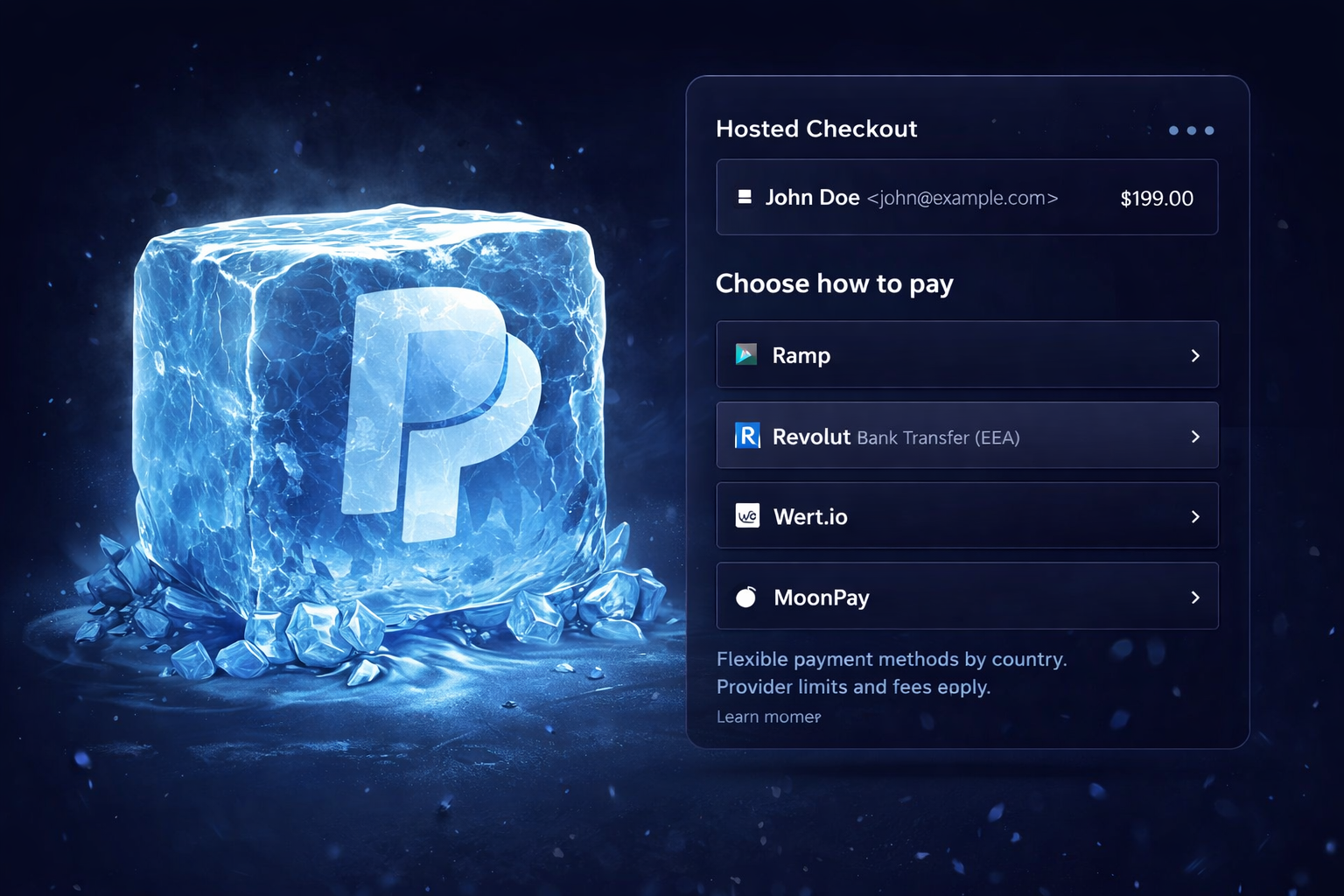
Why PayPal Freezes Funds in High-Risk Businesses (2026 Fix)
PayPal freezes are common in high-risk and digital businesses. Here’s why it happens, what triggers it, and how a multi-provider hosted checkout can reduce failed payments and account disruption.
Why PayPal Freezes High-Risk Funds (And the Checkout Fix That Prevents It)
If you’re selling digital products, running subscriptions, or operating in a restricted niche, you’ve probably seen it: everything works… until suddenly payouts get delayed, holds appear, or the account gets limited. This is why many merchants start searching for a payment gateway without KYC friction—because they need a stable checkout that doesn’t turn into a cashflow nightmare.
Quick takeaway
- PayPal freezes usually happen due to risk signals: category, disputes, spikes, mismatched customer locations, or policy flags.
- The fastest “fix” is not begging support—it’s reducing single-processor dependence.
- A multi-provider hosted checkout can reduce failed payments and keep sales running when one provider blocks.
Why PayPal freezes funds (the real reasons)
PayPal is optimized for low-risk consumer commerce. The moment your risk profile looks “non-standard”, the system becomes defensive. That doesn’t mean you did something wrong—just that you triggered automated controls.
1) Risk category mismatch
Certain verticals get extra scrutiny: adult, subscriptions, digital goods, gaming services, affiliates, and anything that increases dispute risk.
2) Disputes, chargebacks, and refunds
A small spike can trigger rolling reserves or payout holds. Even if you’re honest, the system protects itself first.
3) “Unusual activity” patterns
Sudden sales spikes, new traffic sources, ad campaigns, or lots of international buyers can look suspicious to automated filters.
4) Customer location + IP + issuer signals
The more cross-border the transaction behavior, the more it can raise risk scoring—even for legitimate buyers.
In plain English: high-risk merchants suffer because they rely on a single gatekeeper. When that gate closes, your cashflow stops.
What to do instead of “just wait”
If your payout gets frozen, you can send documents, talk to support, and hope. But that’s reactive. The smarter strategy is building a checkout that can keep running even when one provider can’t.
The stable approach: multi-provider hosted checkout
A hosted checkout that offers multiple providers gives your customers alternatives when limits apply. That means fewer “hard fails”, fewer abandoned carts, and less dependence on a single processor.
- Higher completion rate: Customers can select an option that works in their country/currency.
- Fewer failed payments: If a provider can’t process due to rules/limits, another can be offered.
- Better continuity: One provider issue doesn’t shut down your entire business.
Note: Provider verification requirements can vary by region and risk rules. The goal is low-friction onboarding and flexible routing.
PayPal freeze prevention checklist (merchant version)
Reduce disputes
- Clear product descriptions and delivery expectations
- Instant support contact on checkout + confirmation email
- Refund policy that is easy to find
Reduce single-point failure
- Don’t rely on one provider for 100% of revenue
- Offer multi-provider checkout options
- Use hosted checkout + webhooks to keep order status synced
FAQ
Why does PayPal freeze funds on high-risk stores? ▾
It’s usually triggered by automated risk scoring: category rules, dispute signals, unusual sales spikes, or cross-border patterns.
What’s the best alternative if I keep getting holds? ▾
The best practical alternative is reducing dependence on a single processor. A multi-provider hosted checkout can keep sales running even when one provider is limited.
Is a “payment gateway without KYC” really possible? ▾
“Without KYC” is used differently online. Some providers may still request verification depending on region and risk rules. The core benefit is low-friction onboarding and multiple checkout options.
Stop building on one processor.
If PayPal freezes are killing your cashflow, fix the architecture—not the support tickets. Use a hosted checkout with multiple provider options and keep your revenue running.