
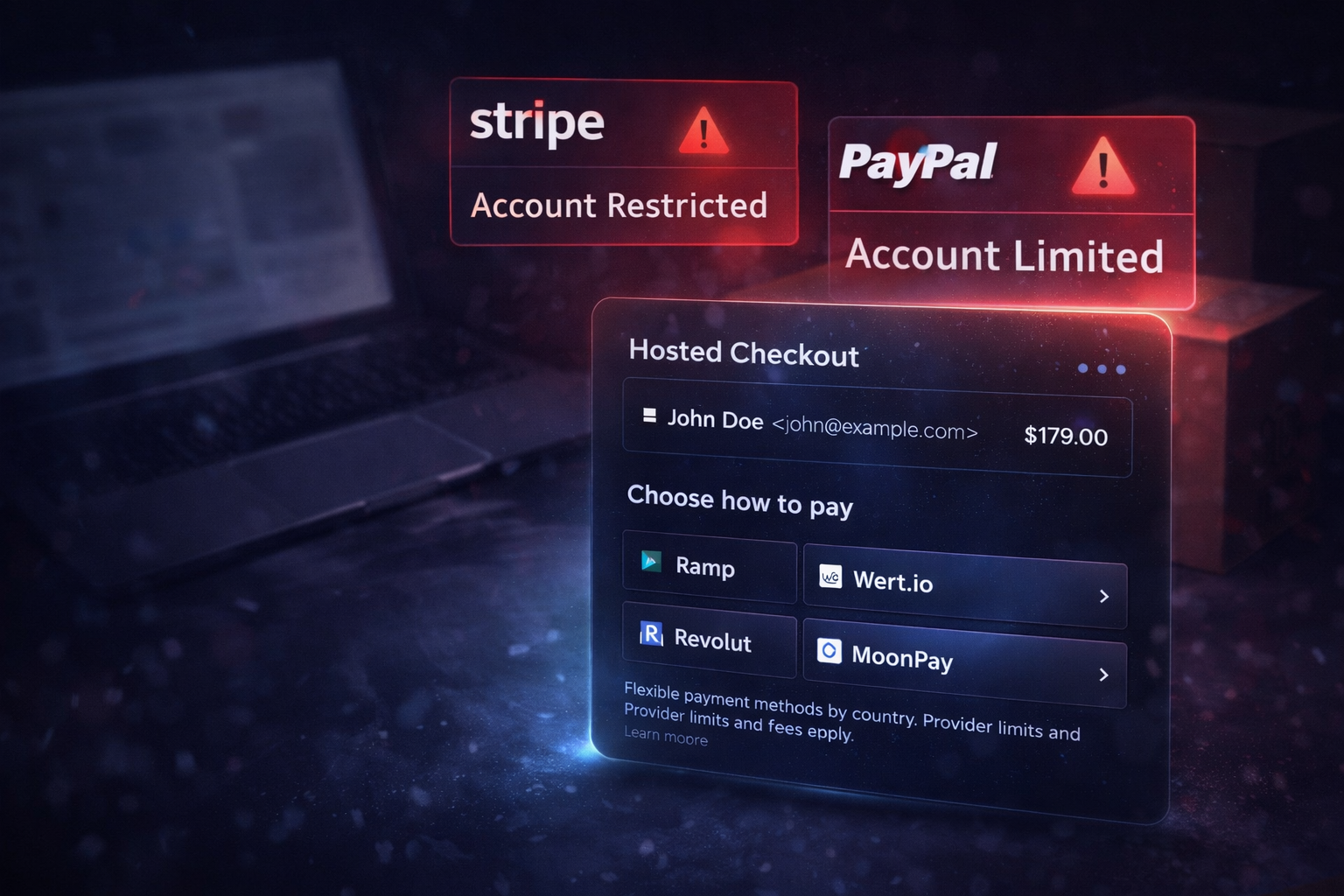
Blocked Dropshipping Store Payment Gateway Saved Me
Stripe blocked me. PayPal limited my account. Ads kept running but checkout died. Here’s the real story of how I rebuilt my dropshipping business with a multi-provider hosted checkout.
They Blocked My Dropshipping Store Overnight — EcomTrade24 Pay Was My Only Way Back
This is not a “motivational success story”. This is the reality of dropshipping in 2026. One moment you’re scaling, your ads are profitable, your store is printing… and the next moment your payment provider decides you’re too risky.
And if you’ve never experienced that before, here’s what it feels like: your business is still online… but it’s dead. Because checkout is the business.
Quick disclaimer
This story is based on real merchant experiences in the dropshipping world. Individual results vary depending on product category, dispute rates, and country rules. Some payment providers may require additional verification depending on region and risk policies. The key lesson remains the same: never build your store on one payment processor.
How it started: a normal dropshipping store
I wasn’t doing anything shady. I had a Shopify store, clean branding, a decent product page, real customer support, and Facebook ads. The niche was not “illegal” — just one of those categories that processors hate because it creates disputes: delivery delays, impulse buying, refunds, and angry customers.
Sales were coming in daily. The store started to stabilize. I was reinvesting everything into ads. You know the dropshipping game: scale fast, optimize fast, keep margins alive.
Everything worked. Until I scaled.
Day 1 of hell: Stripe closed the door
What happened?
I woke up, checked my dashboard, and saw the message you never want to see: “Your account has been restricted.”
Stripe asked for documents. Proof of inventory. Supplier details. Tracking history. A bunch of stuff that sounds normal — but for dropshipping? It becomes a trap.
The ads were still running. People were still clicking. But checkout started failing. That means I was literally paying money for traffic that couldn’t buy.
I did what most dropshippers do: panic, contact support, send documents, refresh the dashboard every 5 minutes. But what nobody tells you is this: the moment you’re flagged as “high risk”, the game is no longer about service — it becomes compliance.
Then PayPal limited me too (the double kill)
My backup was PayPal. Everyone thinks PayPal is the safe option because it boosts trust and conversions. And yes — it can. But for dropshipping? PayPal is often a ticking time bomb.
Why PayPal triggers so easily
- Shipping delays → customers open disputes
- Refund requests → risk score increases
- Scaling spikes → “unusual activity” flags
- Cross-border buyers → more automated checks
PayPal didn’t “hate me”. It just hated the risk pattern that dropshipping naturally creates.
That was the moment I realized something brutal: my store wasn’t running on products or ads… it was running on payment approval. And once approval dies, the whole business dies.
The real dropshipping nightmare: ads still spend, but checkout is dead
That week was one of the worst weeks I’ve ever had as a seller. I had customer support messages, angry customers, failed checkouts, and a burning ad budget.
What I lost
- Daily revenue stopped instantly
- Advertising still spent money
- Customers lost trust
- Chargeback/dispute risk went up
What I learned
- Big processors are not “partners”
- High-risk sellers must plan for blocks
- One processor = single point of failure
- The solution is checkout architecture
The turning point: multi-provider checkout
At this point I stopped searching for a “payment provider” and started searching for a checkout system. Not just “who can process”, but: how can I reduce the risk of downtime?
EcomTrade24 Pay was my rescue
What saved my store was switching to a multi-provider hosted checkout. Instead of relying on just one provider, the checkout offers alternatives depending on region, limits and provider rules.
If one provider fails, customers can select another.
One block doesn't kill all revenue.
Designed for merchants who grow fast.
Note: Provider availability and verification requirements may vary by region and order amount. The goal is a low-friction onboarding experience with multiple checkout options.
What changed after I switched
The biggest change wasn’t “more features”. It was peace of mind. I could finally scale without fear that one random compliance email would destroy my week.
- Checkout success rate improved because customers had alternatives.
- Support load decreased because fewer payments failed.
- Cashflow became stable (no daily panic refreshing dashboards).
- I stopped building on one processor and started building on infrastructure.
If you’re a dropshipper: do this before you scale
The 7-point stability checklist
- Never rely on 1 provider for 100% revenue.
- Use a multi-provider hosted checkout.
- Reduce disputes (clear shipping times, real support).
- Keep refund policy visible & easy.
- Track orders and provide proof of delivery.
- Scale in controlled steps (not 10x overnight).
- Always have an alternative payment path.
If checkout dies, the business dies.
That’s the lesson. Dropshipping is not about Shopify themes. It’s about a stable checkout that survives growth, dispute patterns and “risk algorithms”. If you’re searching for a payment gateway without KYC friction, start with the architecture: multi-provider hosted checkout.