
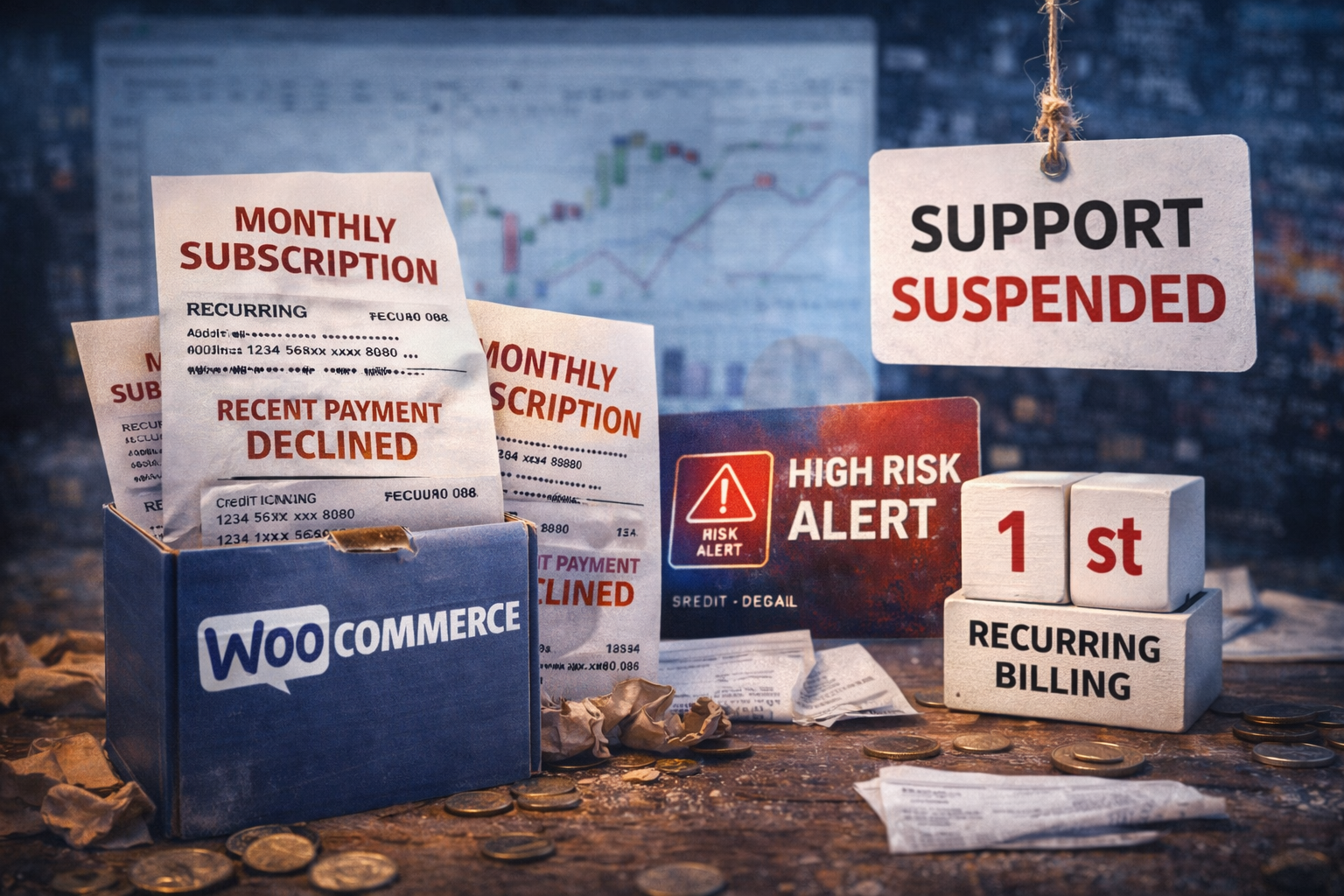
Why Subscription Brands Face Payment Problems (And Solutions)
Subscription-based businesses often look stable from the outside. In reality, recurring payments change how risk is perceived by payment providers — and many restrictions only appear after growth begins.
Subscription businesses are often seen as the ideal online business model. Predictable revenue, recurring customers, and long-term value make subscriptions attractive to founders and investors alike.
Yet many subscription-based businesses discover payment problems only after they begin to scale. Accounts that worked flawlessly for months suddenly face reviews, payout delays, or outright shutdowns.
Why subscriptions look safe — but aren’t
From a business perspective, subscriptions feel stable. Customers opt in, billing is transparent, and revenue is predictable.
From a payment risk perspective, however, subscriptions introduce long-term exposure. Each new subscriber represents not just one transaction, but a series of future charges.
This extended exposure fundamentally changes how payment providers evaluate risk.
Recurring billing amplifies dispute risk
Disputes in subscription businesses often occur weeks or months after the initial signup. Customers may forget they subscribed, misunderstand billing terms, or cancel late.
When disputes happen retroactively, they tend to cluster. Multiple billing cycles can be challenged at once, increasing chargeback velocity.
Payment systems react strongly to this pattern — even if overall customer satisfaction remains high.
Growth changes everything
At low volume, subscriptions rarely attract attention. A handful of recurring charges do not pose meaningful network risk.
As subscriber counts increase, however, exposure grows exponentially. A single issue can affect hundreds or thousands of future transactions.
Automated risk systems are designed to detect this scaling risk early, often before human reviewers become involved.
Why problems often appear without warnings
Many founders expect clear warnings before payment restrictions occur. In subscription models, those warnings are often absent.
Risk thresholds are crossed silently. By the time a review is triggered, decisions may already be automated.
This leads to sudden payout holds or account limitations, even for businesses that believed they were operating safely.
The structural mistake: single-provider dependency
Subscription businesses frequently rely on a single payment provider. As recurring revenue grows, that provider becomes the sole gateway for all future cashflow.
When restrictions occur, the impact is immediate and severe. New signups may continue, but payouts stall. Refunds become complicated. Cashflow planning breaks down.
What resilient subscription businesses do differently
Businesses that survive payment disruptions usually treat payments as infrastructure rather than tooling.
They plan for:
- Multiple payment routes
- Clear separation between billing logic and payouts
- Risk distribution across providers
- Fallback options during reviews
These measures do not eliminate risk, but they significantly reduce the damage when restrictions occur.
Subscription success requires payment foresight
Subscription businesses are not inherently risky. However, their growth profile requires more planning than one-time transaction models.
Payment problems rarely signal wrongdoing. More often, they indicate that the business has outgrown the assumptions built into its original payment setup.
Running subscriptions and worried about payment stability?
This page explains how subscription-based businesses typically adapt their payment infrastructure as they scale.
View options →Running subscriptions or recurring billing? Reduce fails, chargebacks, and account shutdown risk.
See our subscription-ready payment gateway →Frequently Asked Questions
Why do payment gateways freeze merchant funds?
Most payment gateways freeze funds due to automated risk scoring, chargebacks, or sudden volume changes. High-risk merchants are affected most often.
Is a payment gateway without KYC legal?
Yes. Depending on jurisdiction and transaction type, alternative compliance models can be used instead of traditional KYC.
What is the safest alternative to Stripe or PayPal?
Specialized high-risk and white-label payment gateways offer more stable payouts and fewer sudden account shutdowns.
Need a payment setup that won’t get frozen?
Get an instant-approved payment gateway built for high-risk and digital businesses.
Start now – instant approval