
Payment Problems Start After Growth (Not Before)
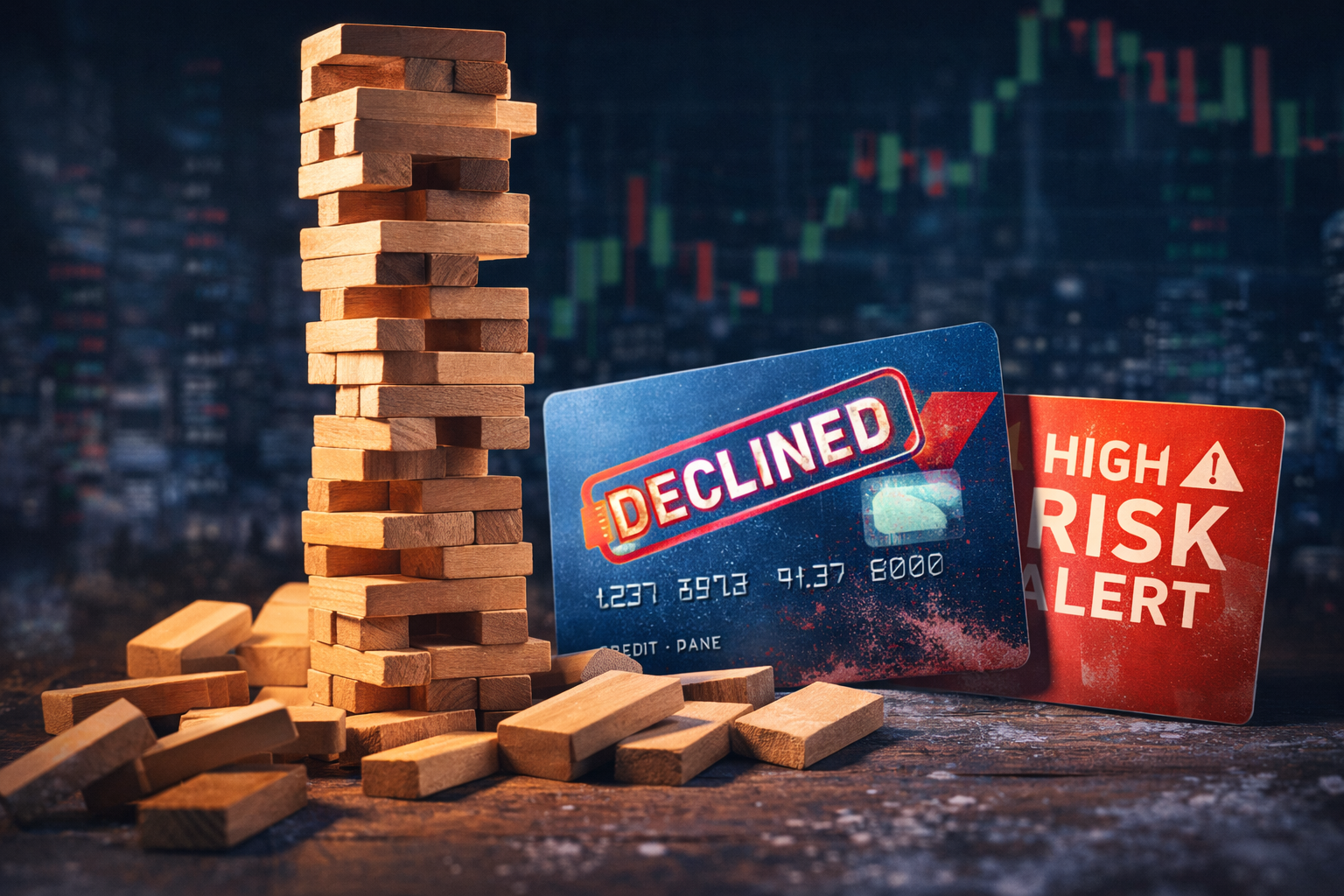
Payment issues rarely appear at the beginning of a business. This article explains why most shutdowns and restrictions happen after growth, how scaling changes risk perception, and why success often triggers payment problems.
Most online businesses don’t experience payment problems on day one. In fact, many operate smoothly for months or even years before any restriction appears.
When payment issues finally happen, founders often feel blindsided. Nothing “illegal” changed. Products stayed the same. Customers kept buying. Yet suddenly, payments stop.
Why early-stage businesses are rarely a concern
At low volumes, payment providers see limited exposure. Small transaction counts, predictable patterns, and minimal chargeback risk keep accounts under the radar.
From a network perspective, early-stage businesses are not dangerous — they are statistically insignificant.
Growth changes how risk is perceived
As revenue increases, so does attention. Higher transaction volumes mean higher potential losses if something goes wrong.
Growth introduces signals that automated systems are trained to monitor:
- Rapid spikes in daily or monthly revenue
- International customers and foreign cards
- Recurring billing or subscription models
- Digital delivery or instant access
- Higher refund velocity during scale
None of these signals indicate fraud on their own. However, combined, they increase uncertainty.
Automation doesn’t understand context
Payment risk systems do not evaluate business intent. They analyze patterns.
A sudden jump from $5,000 to $50,000 in monthly volume may represent success — but to an automated system, it represents volatility.
Context, marketing campaigns, or viral exposure are invisible to these models.
Why founders feel punished for success
Many founders assume payment restrictions are a sign of wrongdoing. In reality, they are often a byproduct of success.
Growth shifts a business into a different risk category — one that requires different infrastructure and safeguards.
The problem is not growth itself. The problem is scaling without adapting payment strategy.
Scaling requires payment resilience
Businesses that scale safely tend to treat payments as infrastructure, not just a tool.
They plan for:
- Multiple payment routes
- Risk distribution across providers
- Fallback options during reviews
- Clear separation between growth and payout logic
These measures are rarely considered early — but become essential once growth accelerates.
Scaling and worried about payment stability?
This page explains how growing businesses typically adapt their payment infrastructure to reduce shutdown and restriction risk.
View options →Need a payment gateway that’s built for global reach and higher-risk businesses?
View EcomTrade24 Pay payment gateway options →Frequently Asked Questions
Why do payment gateways freeze merchant funds?
Most payment gateways freeze funds due to automated risk scoring, chargebacks, or sudden volume changes. High-risk merchants are affected most often.
Is a payment gateway without KYC legal?
Yes. Depending on jurisdiction and transaction type, alternative compliance models can be used instead of traditional KYC.
What is the safest alternative to Stripe or PayPal?
Specialized high-risk and white-label payment gateways offer more stable payouts and fewer sudden account shutdowns.
Need a payment setup that won’t get frozen?
Get an instant-approved payment gateway built for high-risk and digital businesses.
Start now – instant approval