
High Risk Merchant Account vs Payment Gateway Explained (2026)
Understand the difference between a high risk merchant account and a payment gateway. Learn how they work together and why high-risk businesses need optimized infrastructure to scale safely.
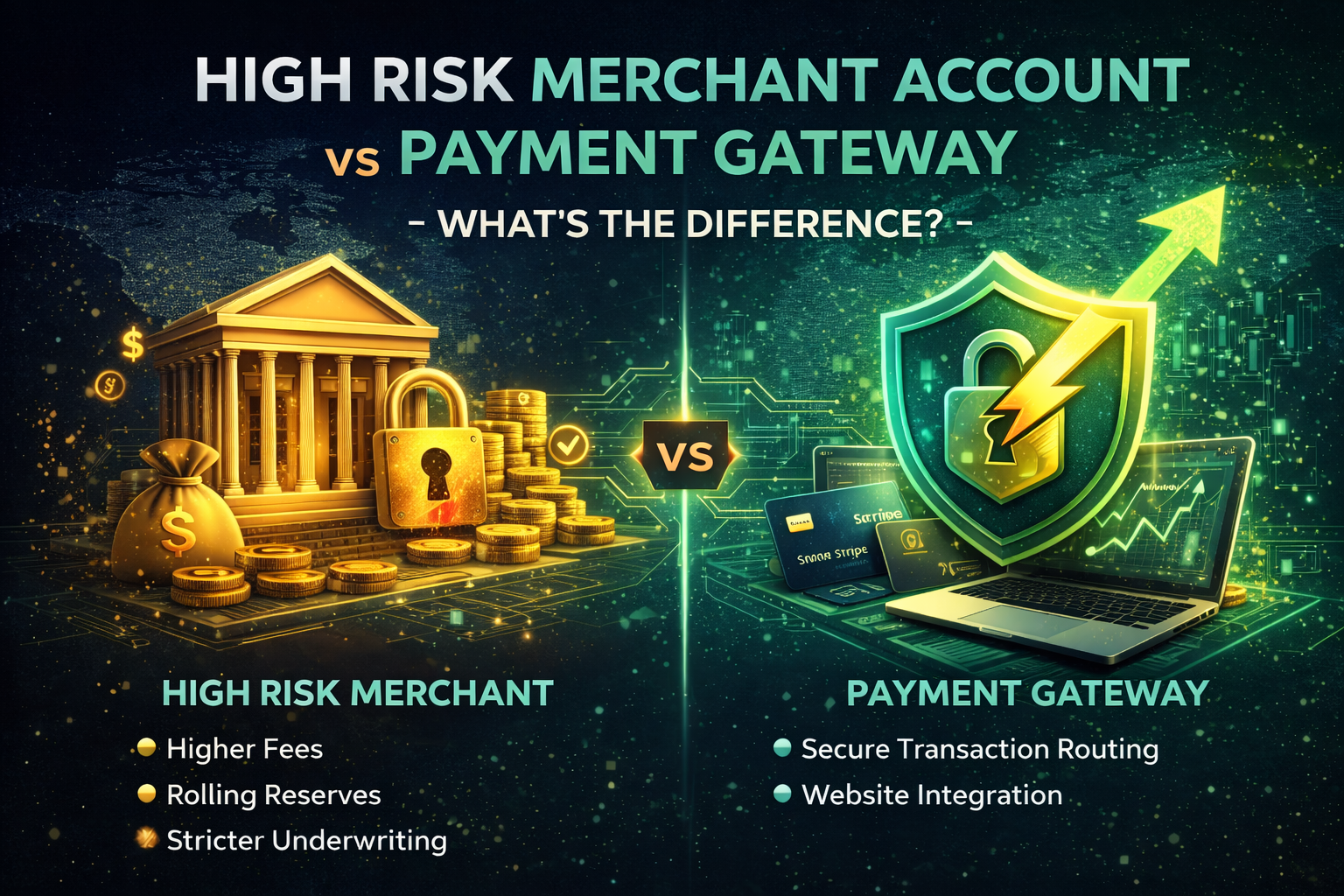
High Risk Merchant Account vs Payment Gateway – What’s the Difference?
Many entrepreneurs use the terms merchant account and payment gateway as if they mean the same thing. They don’t.
If you operate in a high-risk industry, understanding this difference can protect your revenue and prevent costly payment disruptions.
What Is a High Risk Merchant Account?
A merchant account is a specialized bank account that allows your business to accept card payments.
When a customer pays you, the funds temporarily land inside your merchant account before being settled into your business bank account.
High-risk merchant accounts typically involve:
- Higher processing fees
- Rolling reserves
- Stronger underwriting requirements
- Ongoing risk monitoring
This is why many high-risk businesses experience instability.
What Is a Payment Gateway?
A payment gateway is the technology that processes transactions.
It connects your website to acquiring banks and card networks.
Without a gateway, payments cannot be transmitted securely.
Why High-Risk Businesses Need Optimized Infrastructure
Many mainstream providers freeze high-risk businesses unexpectedly. We explained this in detail here:
Why Stripe Freezes High Risk Accounts
Modern merchants need more than just access to payments. They need:
- Smart routing
- Higher approval rates
- Fast settlement structures
- Stable long-term infrastructure
Learn more about optimized high-risk payment systems here:
High Risk Payment Gateway No KYC
Final Thoughts
A merchant account holds funds.
A payment gateway moves funds.
High-risk merchants need both working seamlessly.
For a full breakdown of optimized high-risk infrastructure, read: