
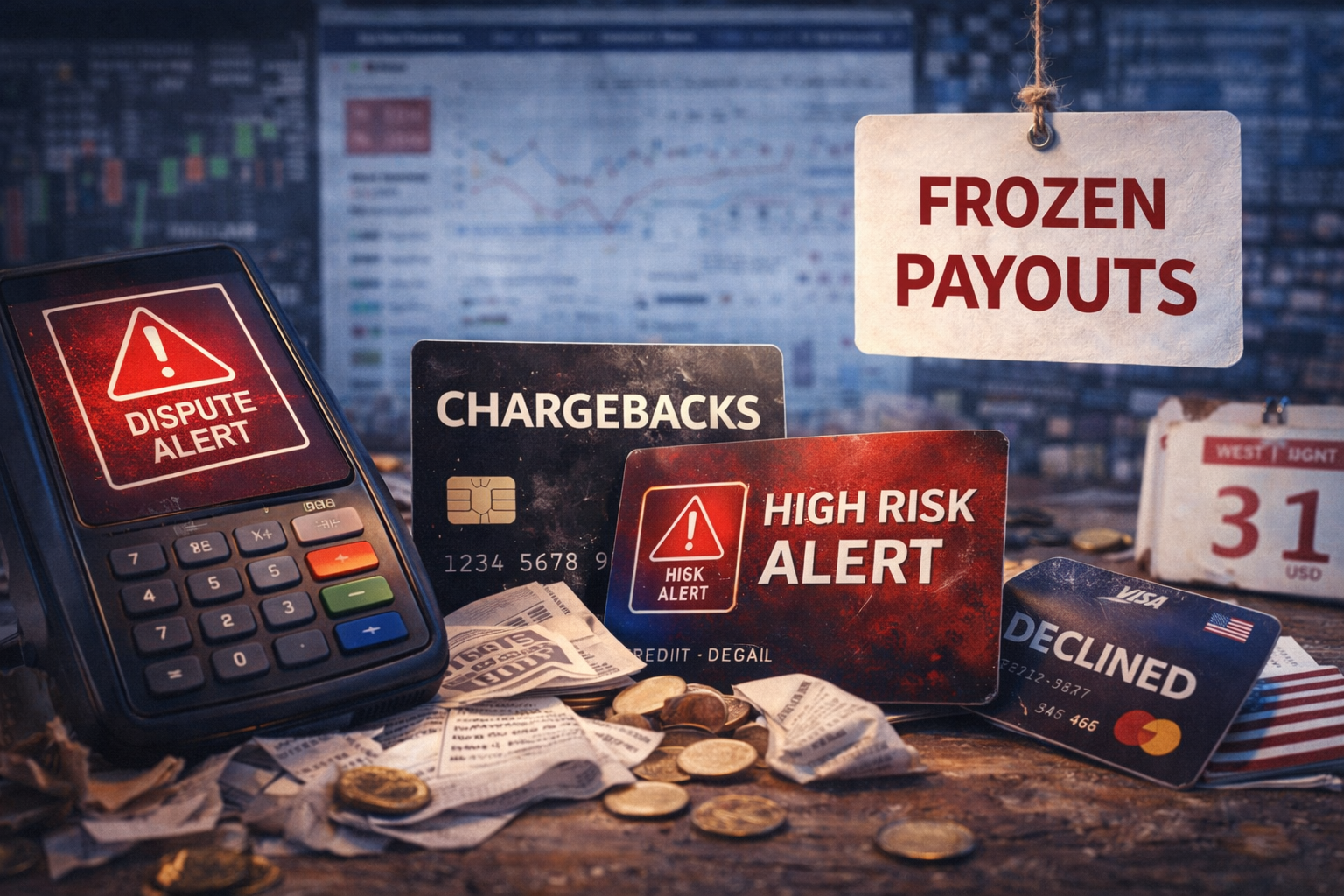
Chargebacks Are Symptoms Not The Problem
Many businesses treat chargebacks as the core issue. In reality, chargebacks are symptoms — signals of deeper structural problems in payment flows, fulfillment, and communication.
Chargebacks are often treated as the enemy. Merchants focus on reducing percentages, monitoring thresholds, and reacting once disputes appear.
While these efforts are understandable, they often miss a crucial point: chargebacks are rarely the root cause.
What chargebacks actually represent
A chargeback is not a single event. It is the final outcome of a failed transaction journey.
Somewhere between purchase and delivery, expectations broke down. Communication failed. Trust eroded.
The dispute is simply the moment that breakdown becomes visible to payment systems.
Why focusing only on percentages is misleading
Many merchants obsess over staying below numerical thresholds. While thresholds matter, they do not tell the full story.
Payment providers analyze patterns: velocity, timing, customer behavior, and how disputes cluster.
A small number of disputes arriving rapidly can be more damaging than a higher percentage spread over time.
Common structural causes behind chargebacks
Chargebacks usually originate from predictable weaknesses:
- Delayed or unclear fulfillment
- Unexpected billing descriptors
- Subscription misunderstandings
- Insufficient post-purchase communication
- Refund processes that feel inaccessible
Addressing disputes without fixing these issues is like treating symptoms without diagnosing the illness.
Why providers react faster than merchants expect
Payment networks are designed to minimize systemic risk. They react early, often before damage becomes visible to merchants.
By the time a founder notices rising disputes, automated systems may already have adjusted risk scores.
This creates the perception of sudden, unfair action — when in reality, the system has been responding gradually.
Chargebacks directly affect cashflow stability
Beyond fees and penalties, chargebacks impact liquidity.
Reserves increase. Payout schedules slow. Holds become more frequent.
Even businesses with healthy revenue can experience cashflow strain during dispute spikes.
Why “fighting chargebacks” is often the wrong goal
Many merchants invest heavily in representment tools. While useful, these tools address outcomes, not causes.
Winning disputes does not necessarily restore trust with payment providers. Underlying risk signals remain.
What resilient businesses do instead
Businesses that stabilize payments long-term approach chargebacks diagnostically.
They ask:
- Where does confusion arise?
- Which customers dispute and why?
- How fast are refunds processed?
- How transparent is post-purchase communication?
Improvements here reduce disputes organically — without chasing percentages.
Chargebacks as early warning signals
When viewed correctly, chargebacks are not failures. They are early warnings.
Businesses that listen to these signals early often prevent escalation into payout holds or account restrictions.
Dealing with disputes or frozen payouts?
This page explains how businesses usually stabilize cashflow when chargebacks and reviews begin to escalate.
View options →Need a more stable payment setup for high-risk or fast-growing stores?
Learn more about our no-KYC fiat payment solution →Frequently Asked Questions
Why do payment gateways freeze merchant funds?
Most payment gateways freeze funds due to automated risk scoring, chargebacks, or sudden volume changes. High-risk merchants are affected most often.
Is a payment gateway without KYC legal?
Yes. Depending on jurisdiction and transaction type, alternative compliance models can be used instead of traditional KYC.
What is the safest alternative to Stripe or PayPal?
Specialized high-risk and white-label payment gateways offer more stable payouts and fewer sudden account shutdowns.
Need a payment setup that won’t get frozen?
Get an instant-approved payment gateway built for high-risk and digital businesses.
Start now – instant approval